New Remediation Standards for Legacy Grow Sites Draw Mixed Reactions
New state standards for cleaning up abandoned and legacy cannabis grow sites in Humboldt County have land trusts praising the requirements and growers calling them unrealistic and unfunded.
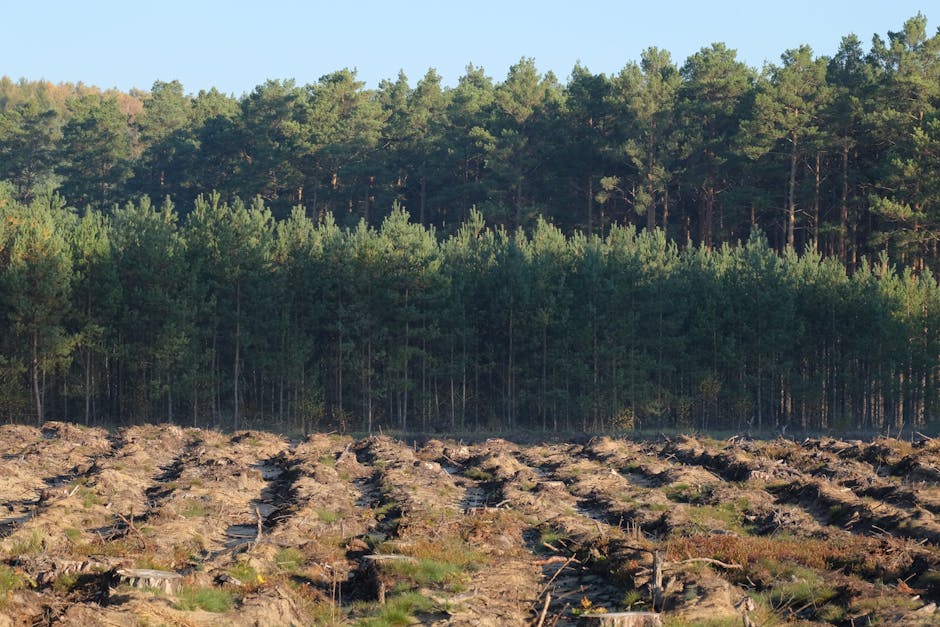
The Regional Water Quality Control Board adopted new remediation standards for legacy cannabis cultivation sites at its March meeting, establishing for the first time a formal framework for how growers, and in some cases landowners who never grew, must restore land that was used for cannabis production before the licensing era.
The standards apply to any parcel in the North Coast region where cannabis was cultivated prior to 2016 and where environmental damage from that cultivation has not been addressed. That includes abandoned grow sites, parcels where cultivation has stopped but the infrastructure remains, and active farms that transitioned to legal permits but have pre-existing damage from their unlicensed years.
The requirements are specific: removal of all irrigation infrastructure from waterways, regrading of terraced hillsides to pre-cultivation contours where feasible, revegetation with native species, and ongoing monitoring of sediment and water quality for a minimum of five years. For sites with documented pesticide contamination, the standards require soil testing and, if contamination exceeds thresholds, removal and disposal of affected soil.
Environmental groups have been pushing for these standards for years. The Mattole Restoration Council called the adoption “long overdue” in a statement released the day after the vote.
“There are hundreds of legacy sites across southern Humboldt where streams were diverted, hillsides were graded, and forest was cleared, and nobody has been required to fix any of it,” said council restoration director Sam Flanagan. “These standards finally put a timeline and a set of benchmarks on that work.”
The Mattole watershed alone contains an estimated 400 to 600 legacy cultivation sites, ranging from small 215 gardens to multi-acre operations that ran for decades before legalization. Many of the smaller sites have naturally revegetated over time, but the larger operations left lasting scars: eroded hillsides, compacted soil, diverted streams, and in some cases, residual pesticide contamination that has persisted for years.
The reaction from the grower community has been more complicated. Several growers who spoke at the board’s public hearing said they support remediation in principle but called the standards unrealistic given the current economic climate.
“I would love to remediate my pre-2016 infrastructure,” said one SoHum farmer who is currently permitted. “My old terraces are a mess, and I know that. But I am losing money on every pound I grow. Where does the remediation money come from?”
The board acknowledged the cost concern but did not include any funding mechanism in the standards. Compliance timelines vary by site severity: low-impact sites have five years to meet the benchmarks, moderate-impact sites have three years, and high-impact sites, those with active erosion into waterways or documented pesticide contamination, must begin remediation within 12 months.
Enforcement is the question nobody at the hearing could answer satisfactorily. The water board’s North Coast office has seven enforcement staff covering an area that stretches from the Oregon border to Point Arena. The number of parcels potentially subject to the new standards runs into the thousands.
“We will prioritize based on environmental impact and proximity to sensitive habitat,” said water board enforcement coordinator Diana Phelps. “We are not going to be knocking on every door in SoHum next month. But sites that are actively degrading waterways will be addressed first.”
The other unanswered question involves liability for landowners who purchased property with pre-existing cultivation damage. Real estate transactions in southern Humboldt routinely involve parcels with legacy grow infrastructure: old greenhouses, abandoned water tanks, grading scars. Under the new standards, the current landowner is responsible for remediation regardless of whether they were the ones who grew.
“I bought my place in 2020. I have never grown a cannabis plant in my life,” said a Mattole area resident who attended the hearing. “But my property has old terraces from the previous owner, and now I’m on the hook to regrade a hillside? That could cost $50,000.”
The water board said it would consider hardship exemptions and phased compliance plans on a case-by-case basis. The standards take effect July 1. Public comments on the implementation guidance are being accepted through May 15 at the water board’s website.