Coho Salmon Spotted in Prairie Creek for First Time in Decade
CDFW biologists have confirmed the presence of coho salmon in Prairie Creek near Orick for the first time since 2016, a milestone for North Coast watershed restoration efforts.
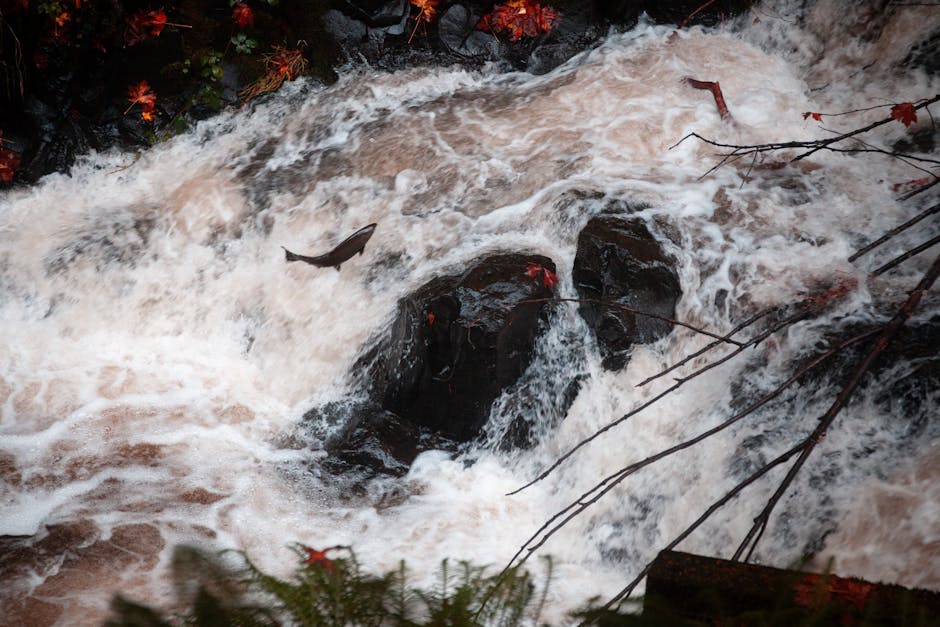
California Department of Fish and Wildlife biologists have confirmed the presence of Southern Oregon/Northern California Coast coho salmon in Prairie Creek, a tributary of Redwood Creek near Orick. The fish, at least seven adults observed during snorkel surveys conducted March 8 through 12, represent the first documented coho presence in the creek since spring 2016.
The discovery follows a decade of intensive restoration work in the Prairie Creek watershed, including 4.3 miles of stream channel reconstruction, the removal of two fish passage barriers (concrete fords dating to the 1960s logging era), and the placement of 287 pieces of large woody debris to create the pool-riffle sequences that coho need for spawning and juvenile rearing.
“This is what a decade of work looks like,” said CDFW senior fisheries biologist Dr. Amanda Kinsey, who led the survey team. “Seven fish doesn’t sound like a lot, and it isn’t. But coho in Prairie Creek after a ten-year absence is significant. It means the habitat is functional again.”
The species
Southern Oregon/Northern California Coast coho salmon are listed as threatened under the federal Endangered Species Act. The population has declined by an estimated 90% from historical levels across its range, which spans coastal watersheds from the Mattole River north to the Rogue River in Oregon.
In Humboldt County, coho populations are monitored in several key watersheds: the Mattole, Freshwater Creek, the South Fork Eel, and Redwood Creek (of which Prairie Creek is a major tributary). Prairie Creek was historically one of the most productive coho streams on the North Coast, supporting an estimated annual spawning population of 2,000 to 4,000 adults through the 1970s.
By the 2000s, that number had collapsed to fewer than 50 in most years. Surveys in 2013 found 12 adults. The 2014 and 2015 surveys found three and two, respectively. After 2016’s single observed fish, CDFW recorded zero coho in Prairie Creek for seven consecutive years.
What changed
The restoration work was led by a partnership between CDFW, the Redwood National and State Parks, and the Yurok Tribe’s fisheries program. Total investment since 2015 exceeds $8.7 million, funded primarily through NOAA’s Pacific Coastal Salmon Recovery Fund and California’s Proposition 1 water bond.
The most impactful intervention, according to Kinsey, was the removal of two concrete stream crossings in the upper watershed in 2019 and 2021. The crossings, installed during timber harvest operations in the 1960s, created 3-foot vertical drops that blocked upstream migration for all salmonid species during low-flow periods.
“Those barriers were the single biggest factor,” Kinsey said. “You can improve habitat all you want downstream, but if the fish can’t reach the upper spawning grounds, you’ve cut off the best gravel in the system.”
The large woody debris installations were the second major piece. Coho require deep pools with overhead cover for both spawning and juvenile summer rearing. Prairie Creek’s channels had been simplified by decades of logging-era sedimentation, reducing pool depth and frequency. The 287 wood structures placed between 2017 and 2024 have increased pool frequency from 2.1 per 100 meters to 5.8 per 100 meters, approaching the pre-disturbance benchmark of 6 to 8 per 100 meters.
Water quality data
Stream temperature monitoring stations in Prairie Creek show a meaningful improvement. Maximum weekly average temperatures in the critical July-August period have dropped from 17.8 degrees Celsius in 2018 to 16.1 degrees Celsius in 2025. The threshold for coho thermal stress is generally considered 16.5 degrees Celsius for extended exposure.
The improvement is attributed partly to riparian canopy recovery. Second-growth redwoods and alders planted along denuded stream banks in the early 2000s now provide roughly 72% canopy closure, up from an estimated 45% in 2015.
Water flow is also better. Winter 2025-2026 delivered above-average rainfall to the Prairie Creek watershed (48.2 inches from October through February, compared to the 30-year average of 41.6 inches). That helped, but Kinsey cautioned against attributing the coho return solely to a wet year.
“Rain helps. But fish don’t come back to a creek just because it’s wet. They come back because the habitat structure is there to support them. That’s the restoration piece.”
What comes next
CDFW plans to increase survey frequency in Prairie Creek to monthly through the spring and summer, tracking whether the returning adults successfully spawn and whether juvenile coho are present by late summer. Kinsey said she expects to find redds (spawning nests) in the upper reaches within weeks.
The Yurok Tribe’s fisheries department will conduct parallel surveys using environmental DNA sampling, a technique that detects species presence from genetic material in water samples without disturbing the fish.
Seven adults in a creek that once held thousands is not a recovery. But it is, by any scientific measure, a beginning.