Eel River Flows Hit Critical Threshold as Irrigation Season Begins
Flow gauges on the South Fork Eel are reading 142 cubic feet per second, just above the 130 cfs emergency threshold, and the growing season has barely started.
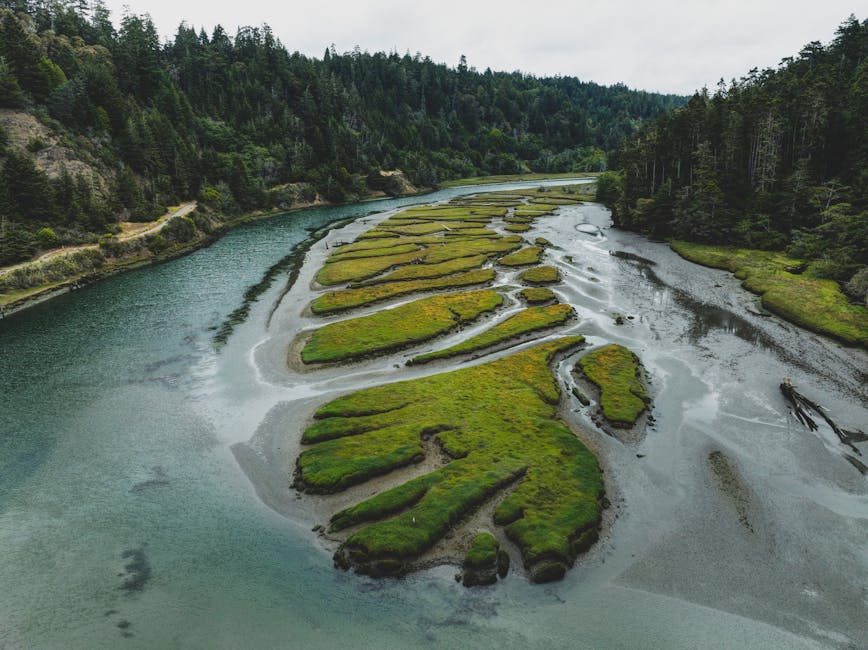
The South Fork Eel River is running at 142 cubic feet per second at the Leggett gauge station, barely above the 130 cfs emergency threshold that triggers mandatory water curtailments. It is April 1. The growing season has not started in earnest. The diversions have not begun in earnest. And the river is already thin.
The State Water Resources Control Board posted the gauge data Monday morning along with a notice reminding water rights holders in the Eel River watershed that curtailment orders could be issued “at any time” if flows drop below the emergency level. Last year, the first curtailment came in late May. The year before, it was June. Nobody in southern Humboldt can remember it coming this close to triggering in the first week of April.
“We had a dry March,” said Dr. Patrick Higgins, a fisheries biologist who has monitored the Eel River system for more than 20 years. “February looked okay, we got a couple of atmospheric rivers that brought the flows up, but March was 40 percent below normal rainfall. The snowpack in the upper watershed is almost gone.”
The Eel is the third-largest river system in California, and its South Fork is the backbone of southern Humboldt. It is also critical habitat for coho salmon, which are listed as threatened under the federal Endangered Species Act, and Chinook salmon, which are a candidate for listing. Low flows concentrate fish in shrinking pools, raise water temperatures, and make them easy targets for predators.
The water rights picture on the South Fork is complicated. There are senior agricultural rights holders, mostly ranchers, who have diversion claims dating to the early 1900s. There are junior appropriative rights holders, including some cannabis cultivators who obtained water rights through the state’s cannabis-specific process. And there is a substantial amount of unpermitted diversion: pumps pulling directly from the river or its tributaries without any legal right to do so.
Cannabis cultivation is the most politically visible water user in the watershed, but it is not the largest. Cattle ranching and timber operations account for more total diversion volume. However, cannabis irrigation is concentrated during the driest months, July through October, which magnifies its impact on low flows.
The state’s cannabis water policy requires cultivators to store winter water and use it during the dry season, but compliance has been uneven. A 2024 audit by the water board found that 38 percent of permitted cannabis operations in the Eel River watershed had not completed required water storage infrastructure, and 15 percent had no forbearance period documentation on file.
“Storage is the answer, but storage costs money, and these farmers are going broke,” said Natalya Sanchez, director of the Humboldt County Growers Alliance. “You can’t mandate $40,000 in water infrastructure for someone who is selling pounds at $400.”
The Mattole Restoration Council, which operates downstream on the Mattole River, said it is watching the Eel data closely because the two systems share groundwater connectivity. “When the South Fork Eel drops, the Mattole feels it,” said council director Sam Flanagan.
CalTrout, the statewide coldwater fisheries organization, has been pressing the water board to lower the curtailment threshold to 150 cfs, arguing that the current 130 cfs level is based on outdated habitat modeling and does not adequately protect juvenile coho during their first summer in the river.
The water board has not committed to changing the threshold but said in a statement that it is “actively monitoring conditions and prepared to act quickly if flows decline further.”
For now, the gauge at Leggett ticks along at 142. The forecast shows no significant rain through April 12. The pumps are not running yet. But they will be soon.