Cal Fire Announces Early Start to Vegetation Management Season
Cal Fire's Humboldt-Del Norte unit will begin prescribed burns and mechanical fuel reduction two weeks ahead of schedule, citing below-average soil moisture and an early drying trend despite January's wet storms.
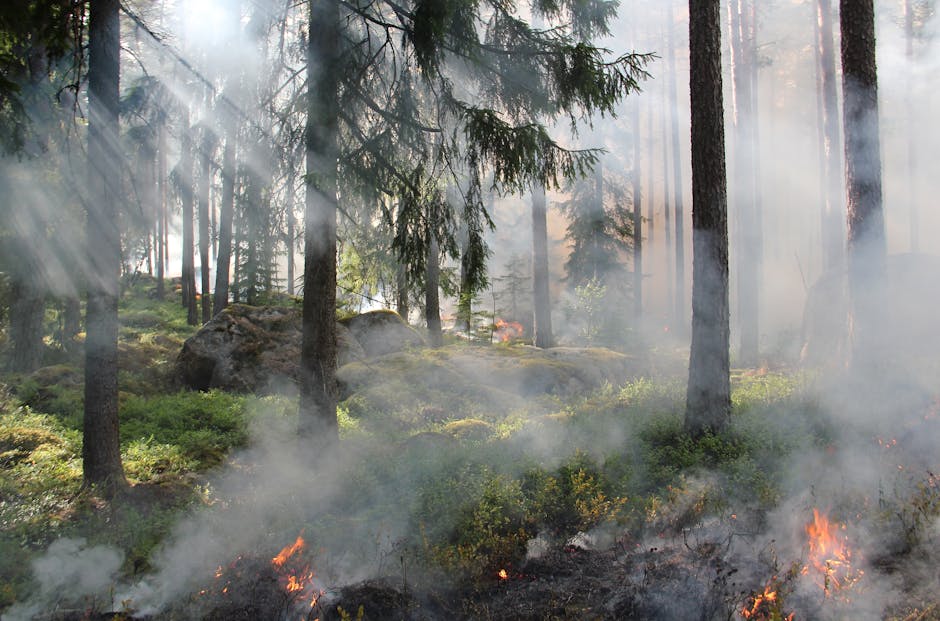
Cal Fire’s Humboldt-Del Norte unit announced Wednesday that it will begin prescribed burns and mechanical fuel reduction on March 3, approximately two weeks ahead of the typical mid-March start date. The decision follows soil moisture readings and vegetation assessments that indicate an earlier-than-normal drying trend across the North Coast.
The announcement may seem counterintuitive. January was wet. Very wet. The Eureka weather station recorded 9.87 inches of precipitation for the month, 142 percent of the January average. Southern Humboldt saw even more, with the Garberville station logging 14.2 inches. Roads flooded. Creeks jumped their banks. It felt like a proper North Coast winter.
But February has been a different story. Through 25 days, Eureka has recorded just 1.93 inches, making it the driest February since 2020. Garberville has logged 2.41 inches. The abrupt shift from saturated to dry has created conditions that Cal Fire says warrant attention.
“People assume that a wet January means we’re in good shape for fire season,” said Battalion Chief Rory Gilham of the Humboldt-Del Norte unit. “It doesn’t work that way. January loaded the landscape with growth. February dried it out. That’s a lot of fuel with diminishing moisture.”
The numbers support the concern. Cal Fire measures live fuel moisture content in chamise, a standard indicator species, at 10 monitoring sites across Humboldt County. The February 20 sampling round showed an average of 74 percent, down from 112 percent on January 20. The five-year average for late February is 89 percent. Readings below 80 percent indicate that vegetation is entering the moisture range where it becomes available to burn.
Dead fuel moisture tells a similar story. The 10-hour fuel moisture index, which tracks the moisture content of small dead branches and surface litter, dropped to 11 percent at the Kneeland remote weather station on February 23. The critical threshold for fire weather advisories is 8 percent.
“We’re not there yet,” Gilham said. “But the trajectory is faster than normal, and we’d rather get ahead of it.”
The early start applies to two categories of work: prescribed burns on Cal Fire-managed lands and mechanical fuel reduction (mowing, chipping, and hand clearing) along state-responsibility-area roads and community defense zones. The unit has identified 14 priority burn units totaling approximately 2,200 acres across Humboldt County. Six of those units are in the Mattole drainage, where dense stands of coyote brush and Douglas fir regrowth from the 2003 Honeydew fire complex have created heavy fuel loads.
Mechanical work will focus on roadside clearance along Shelter Cove Road, Alderpoint Road, and the Briceland Thorn Road corridor. Cal Fire will also conduct defensible space inspections in several communities designated as “at-risk” under the county’s Community Wildfire Protection Plan.
The timing creates a narrow operational window. Prescribed burns require specific weather conditions: low wind, moderate humidity, and adequate soil moisture to prevent fire from moving into root systems. As the season dries further, the burn window closes. Gilham said the two-week head start could mean the difference between completing the priority burns and having to postpone some until fall.
“Last year we lost three burn days in March to wind events and ended up carrying two units into October,” he said. “Starting earlier gives us a cushion.”
Residents in areas near planned burn units will receive notification mailers and can expect to see smoke on burn days. Cal Fire posts daily burn status updates at readyforwildfire.org and through the Humboldt County alert system.
The broader context is hard to ignore. California’s fire seasons have been trending earlier and longer for two decades. Cal Fire’s statewide data shows that the average start date for significant wildfire activity has shifted roughly 18 days earlier since 2000. Humboldt County, buffered by coastal fog and higher precipitation than inland regions, has historically been somewhat insulated from this trend. That insulation is thinning.
The last major wildfire in the Humboldt-Del Norte unit’s jurisdiction was the 2020 August Complex fire, which burned through portions of eastern Humboldt and Trinity counties. The unit recorded 47 wildland fires in 2025, all contained under 10 acres.
Gilham said the goal of early vegetation management is simple. “Keep that number small.”