Eel River Flows Double After Storm Sequence
Back-to-back January storms have pushed Eel River flows to 12,400 cubic feet per second at Scotia, double the 20-year January median and the best conditions for salmon migration in three years.
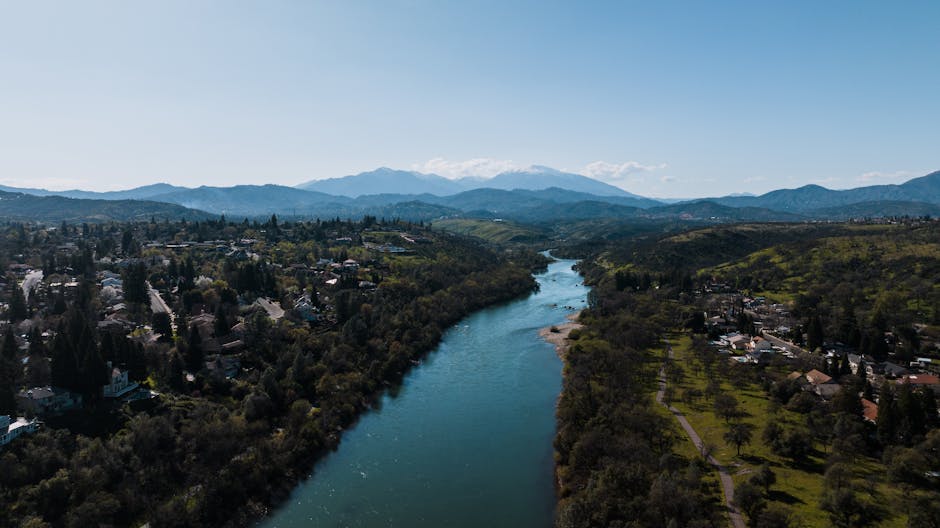
The Eel River at Scotia is running at 12,400 cubic feet per second as of Tuesday morning. That’s double the 20-year January median of 6,100 cfs and the highest sustained base flow the river has carried in January since 2023.
Two atmospheric river events (the category 3 system on January 11-12 and a follow-up category 2 on January 17-18) delivered a combined 9.8 inches of rain to the upper watershed in 17 days. The river spiked to 28.4 feet during the first storm, receded, spiked again to 22.1 feet during the second, and has now settled into an elevated but stable pattern.
The result is a river that looks like a river is supposed to look in January. Brown, fast, and full.
Flow readings across the system
The USGS operates five active stream gauges on the Eel River and its major tributaries. All five are running above their January medians.
Scotia (main stem): 12,400 cfs. January median: 6,100 cfs.
Fort Seward (main stem, upstream): 8,700 cfs. January median: 4,200 cfs.
Miranda (South Fork): 4,100 cfs. January median: 2,300 cfs.
Bridgeville (Van Duzen): 2,800 cfs. January median: 1,400 cfs.
Dos Rios (upper main stem): 3,200 cfs. January median: 1,500 cfs.
The South Fork numbers are particularly notable. The South Fork Eel is the primary spawning corridor for Chinook and coho salmon returning to the upper watershed, and flow volume directly affects passage conditions through shallow riffles and gravel bars that can become barriers in dry years.
Salmon passage
CDFW biologists conducting spawning surveys on the South Fork last week observed adult Chinook salmon at four survey reaches between Miranda and Phillipsville. They counted 23 redds (gravel nests where females deposit eggs) across a 6-mile stretch, which is above the 10-year average of 17 for this survey period.
“The flows are giving fish access to reaches they couldn’t get to in 2024 or 2025,” said CDFW fisheries biologist Karen Metz. “Both of those years were below average for January discharge on the South Fork. This year the river is actually doing its job.”
Coho salmon, which are listed as threatened under the Endangered Species Act in the Southern Oregon/Northern California coast population, typically arrive at Eel River tributaries between December and February. CDFW has not released coho-specific survey data for January yet, but Metz said field teams have observed “encouraging signs” on several tributaries.
Water temperature readings at Miranda are holding at 47.3 degrees Fahrenheit, within the optimal range for salmonid egg incubation (45 to 55 degrees). Turbidity has been elevated following the storms (readings above 100 NTU during peak flows) but has dropped back to 22 NTU as of Monday, well within the range that allows fish to navigate and feed.
Historical context
January is the Eel’s most important month hydrologically. Winter rain recharges the alluvial aquifer, fills tributaries, and sets the stage for spring and summer water availability. Years with strong January flows tend to produce better outcomes for both fish populations and downstream water users.
The last time the Eel ran this high in late January was 2023, when a series of storms pushed Scotia flows above 15,000 cfs for most of the month. That year produced the best Chinook returns in a decade on the South Fork.
2024 and 2025 were both below-median January flow years. The 2024 Chinook run was the weakest in five years.
“One good January doesn’t fix a watershed,” Metz said. “But it helps. The fish are here, the water’s here, the gravel’s getting cleaned. You can’t ask for more than that in the short term.”
Forecast
The NWS Climate Prediction Center’s outlook for February shows equal chances of above-normal and near-normal precipitation for the North Coast. The La Nina pattern that’s been driving the wet January is expected to weaken through spring.
If February delivers even average rainfall, the Eel should maintain flows above the January median well into March. That would provide sustained spawning and rearing conditions through the critical egg incubation period.
The next storm system is expected around February 2, carrying 1 to 3 inches of rain. River response will depend on how saturated soils remain between now and then. At current conditions, even a moderate storm will produce a noticeable bump.
The Eel is doing what the Eel does when it gets enough water. The question, as always, is whether the water keeps coming.