Mateel Community Center Celebrates Fifty Years With Reggae Fundraiser
The Mateel Community Center marked its fiftieth anniversary Saturday with a reggae fundraiser that packed the hall and brought out three generations of Southern Humboldt residents.
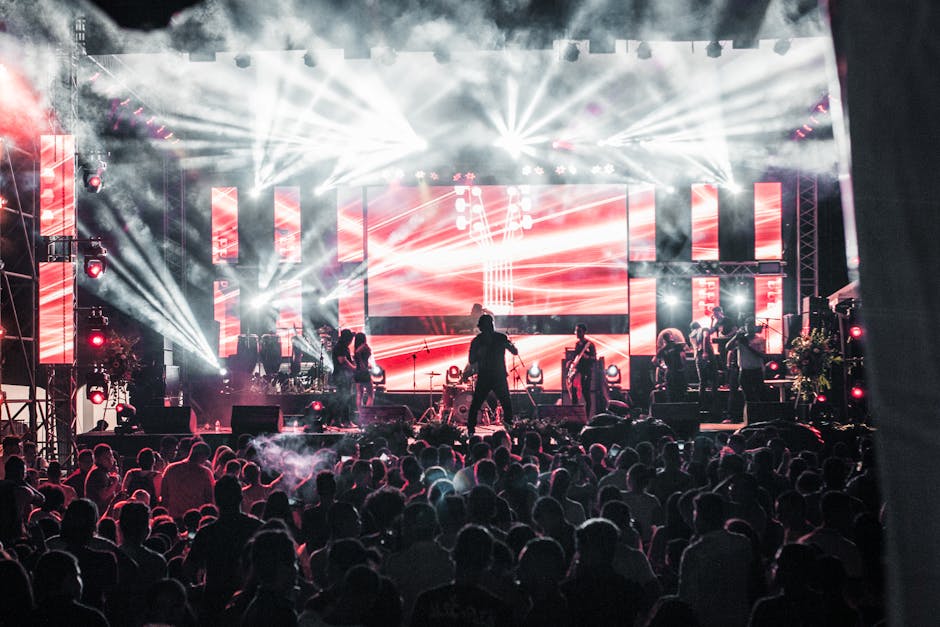
The bass hit you in the parking lot. Before you even saw the building, you could feel the low end thumping through the gravel, through the soles of your boots, up into your chest. A woman in a tie-dye poncho was dancing near the entrance, eyes closed, holding a plate of tamales in one hand and a toddler’s wrist in the other. Inside, the Mateel Community Center was doing what it has done for fifty years: holding a community together with music, food, and the stubborn belief that a building in the middle of nowhere can matter.
Saturday’s reggae fundraiser, billed as “Fifty Years of Roots,” sold out its 450-person capacity by Thursday. Another hundred or so milled around outside, content to hear the music through the walls and catch up with neighbors they hadn’t seen since the last event.
The building
The Mateel sits on Redway Drive in Redway, population roughly 1,200, depending on who’s counting and whether you include the folks up the dirt roads. The center was founded in 1976 by a group of back-to-the-landers who pooled money, labor, and an optimism that in retrospect seems almost reckless. The original structure was a converted barn. The current building, a proper community hall with a kitchen, stage, and hardwood floor, was built in 1983 with volunteer labor and donated materials.
It has hosted wedding receptions, funerals, town halls, flu shot clinics, AA meetings, and some of the most legendary concerts in Northern California history.
Reggae on the River
You can’t talk about the Mateel without talking about Reggae on the River. The festival, which ran from 1984 to 2013 (with various interruptions and revivals), put Southern Humboldt on the cultural map in a way that nothing else before or since has managed. At its peak in the late 1990s and early 2000s, Reggae on the River drew 10,000 people to the banks of the Eel and brought artists like Burning Spear, Steel Pulse, Ziggy Marley, and Toots and the Maytals to a place most of them had never heard of.
The festival’s relationship with the Mateel was complicated. Financial disputes, board conflicts, and a lawsuit that dragged on for years eventually severed the connection. Reggae on the River continued under different management for a while. Then it stopped. The Mateel survived, but the separation left scars.
Saturday’s event felt like a conscious effort to honor the memory without reopening the wounds.
“We’re not relitigating anything tonight,” said Mateel board president Carol Conner before the music started. “This is about what this place means to people. Fifty years. That’s not nothing.”
The music
Three bands played. Jah Sun opened with a 45-minute set that got the floor moving immediately. Humboldt Calypso followed with a looser, more improvisational feel, their steel drums bouncing off the wooden ceiling beams. The headliner, a reunited version of Fully Fullwood’s band (Fullwood is a reggae bassist who has lived in SoHum since the late ’90s), closed the night with a two-hour set that ranged from roots reggae to dub to something that sounded like it might have been jazz if you squinted.
The sound system, run by local audio engineer Pete Delgado, was impeccable. Clear at every volume. The Mateel has always had good sound, which is not an accident. Delgado has been running events there since 1994.
The people
What made the night was the crowd. Three generations, easily. There were gray-haired couples who remembered the barn days, dancing with the same relaxed sway they probably had at 25. There were parents in their 40s and 50s who grew up going to Reggae on the River as kids. And there were teenagers, some clearly dragged by their parents, who started out slumped against the wall and ended up on the dance floor by the second set.
Tom and Elaine Vargas, who moved to Redway in 1979, stood near the back holding paper cups of red wine. “We helped pour the foundation for this building,” Tom said. “Literally. Mixed the concrete. I was 26. Look at it now.”
He paused and looked around the room. “Same building. Same people, mostly. A few new faces. That’s how it should be.”
The kitchen served tamales, rice and beans, and banana bread donated by the Woodrose Cafe. A silent auction in the side room raised money for roof repairs (the Mateel’s north-facing section has been leaking since November). Final auction numbers weren’t available by press time, but Conner estimated the evening would net between $12,000 and $15,000 for the building fund.
By 11 p.m. the crowd had thinned to the committed. Fully Fullwood was still playing, quieter now, almost ambient. A few couples slow-danced. The bass was gentler but still there, still vibrating through the floor, through fifty years of concrete and memory and music that refuses to stop.